
今天给大家带来的是PTE写作中的SWT题型的例题解析:Growing legumes,需要注意的是,这道题很难,所以大家要做好心理准备,尤其是目标分没有上79分的话,这道题可以放弃,但放弃不是说不做了,而是把文章中反复出现的单词和开头结尾一些比较重点的单词理解一下,摘抄出来,组成5~75个字一句话的答案。老师提醒:遇到这种含有大量生词、专业性的题目,不用每句话都看懂。
原文:
Gardeners can feed their families and enrich the soil by growing legumes, such as green beans, soybeans, lentils and peas. Legume roots produce their own nitrogen, which is a major fertilizer nutrient needed by all plants for growth. Nitrogen is produced in nodules that form on the roots of legumes, which contain Rhizobium bacteria. The bacteria take nitrogen from the air and convert it into a form the plants can use. When legumes are pulled up in the fall, excess nitrogen from the nodules is left in the soil. The excess organic nitrogen can be used by other plants the following growing season. It’s considered organic nitrogen because it was produced naturally, making green beans or peas great rotational crops in an organic crop production system. Organic growers prefer organic nitrogen because of its natural origins and because it breaks down slowly in the soil, thus slowly feeding plants throughout the growing season. Synthetic nitrogen fertilizers tend to release nitrogen quickly and are harsher on the environment. Synthetic nitrogen fertilizers are generally applied in split applications during the season to mimic the slow release of organic nitrogen sources. Each specific legume generally requires a specific type of Rhizobium bacteria to produce nodules on their roots. Gardeners who have never grown green beans before can purchase small bags of inoculum or bacteria from most popular vegetable seed catalogs. Before planting beans, open the package and pour in the dust-like bacteria among the seed. Shake the package and then plant. Nodules will form on the roots as they develop. The bacteria will remain in the soil, making it unnecessary to inoculate the seed next year. Do not apply extra nitrogen fertilizer to bean crops. Doing so makes bacteria in the nodules lazy, encouraging them to stop producing their own nitrogen. Legumes that are particularly popular in the home vegetable garden include lima beans, peas, edible soybeans, lentils and fava beans. In a recent survey, 44 percent of gardeners trained through New Mexico State University’s Master Gardener Program said they grew green beans and other legumes in their home gardens. When planting, be sure to purchase appropriate strains of Rhizobium bacteria for each type of legume.
翻译:
Gardeners can feed their families and enrich the soil by growing legumes, such as green beans, soybeans, lentils and peas.
园丁们可以通过种植豆类,如青豆、大豆、小扁豆和豌豆,来养活他们的家庭并使土壤肥沃。
Legume roots produce their own nitrogen, which is a major fertilizer nutrient needed by all plants for growth.
豆科植物的根自身产生氮,这是所有植物生长所需的主要肥料养分。
Nitrogen is produced in nodules that form on the roots of legumes, which contain Rhizobium bacteria.
氮是在豆科植物的根上形成的根瘤中产生的,其中含有根瘤菌。
The bacteria take nitrogen from the air and convert it into a form the plants can use.
这种细菌从空气中吸收氮,并将其转化为植物可以利用的形式。
When legumes are pulled up in the fall, excess nitrogen from the nodules is left in the soil.
当豆科植物在秋天被拔掉时,根瘤中多余的氮留在了土壤中。
The excess organic nitrogen can be used by other plants the following growing season.
多余的有机氮可以在接下来的生长季节被其他植物利用。
It’s considered organic nitrogen because it was produced naturally, making green beans or peas great rotational crops in an organic crop production system.
它被认为是有机氮,因为它是自然产生的,使青豆或豌豆成为有机作物生产系统中很好的轮作作物。
Organic growers prefer organic nitrogen because of its natural origins and because it breaks down slowly in the soil, thus slowly feeding plants throughout the growing season.
有机作物种植者更喜欢有机氮,因为它是天然的,而且在土壤中分解得很慢,因此在整个生长季节中缓慢地为植物提供养分。
Synthetic nitrogen fertilizers tend to release nitrogen quickly and are harsher on the environment.
合成氮肥释放氮的速度快,对环境的影响更大。
Synthetic nitrogen fertilizers are generally applied in split applications during the season to mimic the slow release of organic nitrogen sources.
为了模拟有机氮源的缓慢释放,合成氮肥通常在季节中分次施用。
Each specific legume generally requires a specific type of Rhizobium bacteria to produce nodules on their roots.
每一种特定的豆科植物通常需要一种特定的根瘤菌在其根上产生根瘤。
Gardeners who have never grown green beans before can purchase small bags of inoculum or bacteria from most popular vegetable seed catalogs.
以前从未种过绿豆的园丁可以从最受欢迎的蔬菜种子目录上购买小袋的接种剂或细菌。
Before planting beans, open the package and pour in the dust-like bacteria among the seed.
在种豆子之前,打开包装,在种子中加入粉尘状的细菌。
Shake the package and then plant.
摇动包装,然后种植。
Nodules will form on the roots as they develop.
根瘤在生长过程中会在根上形成。
The bacteria will remain in the soil, making it unnecessary to inoculate the seed next year.
这些细菌将留在土壤中,使得明年不必接种种子。
Do not apply extra nitrogen fertilizer to bean crops.
不要向豆类作物施用额外的氮肥。
Doing so makes bacteria in the nodules lazy, encouraging them to stop producing their own nitrogen.
这样做会使结核中的细菌懒惰,促使它们停止生产自身的氮。
Legumes that are particularly popular in the home vegetable garden include lima beans, peas, edible soybeans, lentils and fava beans.
在家庭菜园里特别受欢迎的豆类包括利马豆、豌豆、食用大豆、扁豆和蚕豆。
In a recent survey, 44 percent of gardeners trained through New Mexico State University’s Master Gardener Program said they grew green beans and other legumes in their home gardens.
在最近的一项调查中,接受新墨西哥州立大学(New Mexico State University)园艺硕士项目培训的园丁中,有44%的人表示,他们在自家花园里种植青豆和其他豆类植物。
When planting, be sure to purchase appropriate strains of Rhizobium bacteria for each type of legume.
种植时,一定要为每一种豆科植物购买合适的根瘤菌菌株。
解析:
这节课很难,所以大家做好心理准备,尤其是你的目标分没有上79分的话,我的建议是这道题直接放弃,但是放弃不是说不做了,而是抄可能每一段的开头和结尾。注意,同类型的题目,只要你觉得这个SWT做不下去了,开头结尾抄上,然后中间随便抄一抄,冲到大概70个字就OK了,不用具体去掌握这么具有专业性的题目。
第一部分:PTE写作SWT题型的生难词积累
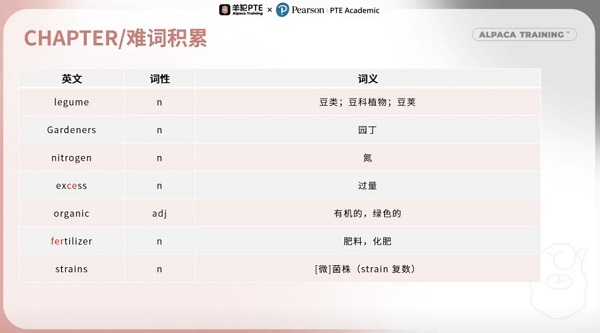
1、它叫做growing legumes,种植豆类。首先这个单词legume,豆类、豆荚、豆科植物。这个单词不要去背,我接触英语这么久了,这个单词我都没见过几次;Gardeners,园丁,就是种豆的人。gardeners nitrogen是这道题当中的一个核心,为什么要种痘,就是因为会产生nitrogen;excess,过量的;organic, 有机的,绿色的,有机食物organic food;Fertilizer, 化肥、肥料;Strains这个单词往往表示紧张,在这里面它是名词,表示菌株。
2、其实看到这种题目,我的建议就是你扫一眼一堆生单词,就随便抄就好了,你只有10分钟,怎么可能去看懂这篇文章,基本上是不太可能的一件事情了。
第二部分:PTE写作SWT题型的原文解析
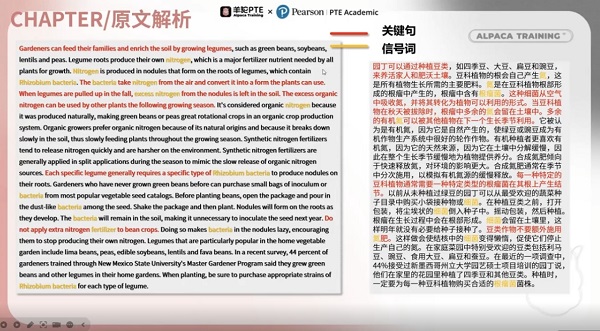
1、首先,Gardeners can feed families and enrich the soul by growing legumes, 就是garden的园丁,他要去养活他的家人,或者说让这个土壤变得更加的肥沃。那么他可以种植一些豆类,比方四季豆、大豆、扁豆、豌豆。这个豆类的植物,自己会产生氮气,which is the major fertilize new netrient needed by all plants for growth, 是所有植物在生长的过程当中非常需要的氮气。在豆类的根茎当中会产生氮,而这个氮它好在哪里?它有这个baeria这样的一种细菌
,From the air, 它会吸收大气中的氮,然后把它转变成植物能够利用的某种形式。
2、所以当豆科植物,比方说它put up in the fall不是掉落的意思,是在秋天的意思。在秋天,多余的氮留在土壤当中,而这样的残留,我们刚刚不是说它是植物所需要的吗?就能在下一季节在植物生长的过程中被运用。这是一种有机氮,不是人造的,或者说某种人为行为产生的,它就是大豆所生产的有机的东西。它是天然的,然后它会慢慢分解,为整个生产季节,以及下一次生产的季节,为植物提供一种非常有用的养料。
3、所以整个这一块我们明白它讲的就是几个事情,第一,你要种豆。第二,种豆能够产生氮气,还有一点就是氮气怎么产生的?是因为它的根当中有一种细菌。氮气好在哪里?是所有植物生长过程中都需要的东西。后面讲的差不多,这个细菌指的是什么,又讲了一大堆什么fertilizer,化肥。整个这一块都是在说园丁们请你种豆,种豆是好的。
第三部分:PTE写作SWT题型的答案组成
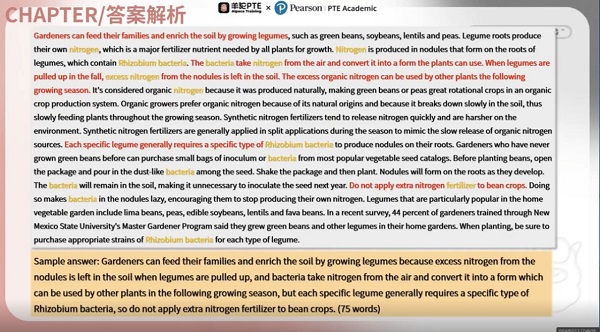
在答案当中,第一要有legume,第二要有细菌,第三要有氮气。其实你只要把这几个东西都带到了,那这篇文章其实也OK了。看似很难,但是我们在做总结的时候不用去看懂,只要把文章中反复出现的单词和开头结尾一些比较重点的单词理解一下,摘抄出来就可以。组成5~75个字一句话的答案。所以最后强调一遍,这种特别难的题目,请各位不要纠结,不要把每句话都看懂。
 PTE口语DI题型
 PTE写作SWT题型
 PTE口语DI题型
PTE写作SWT题型
PTE口语DI题型
PTE写作SWT题型
 PTE题库
PTE阅读
PTE题库
PTE阅读
 PTE写作
PTE写作SWT题型
PTE写作
PTE写作SWT题型
 PTE考试流程
PTE口语RA题型
PTE考试流程
PTE口语RA题型